
SynqHarbor AI
A human-led collaboration interface with task revisions, separate approvals and portable public engineering documentation.
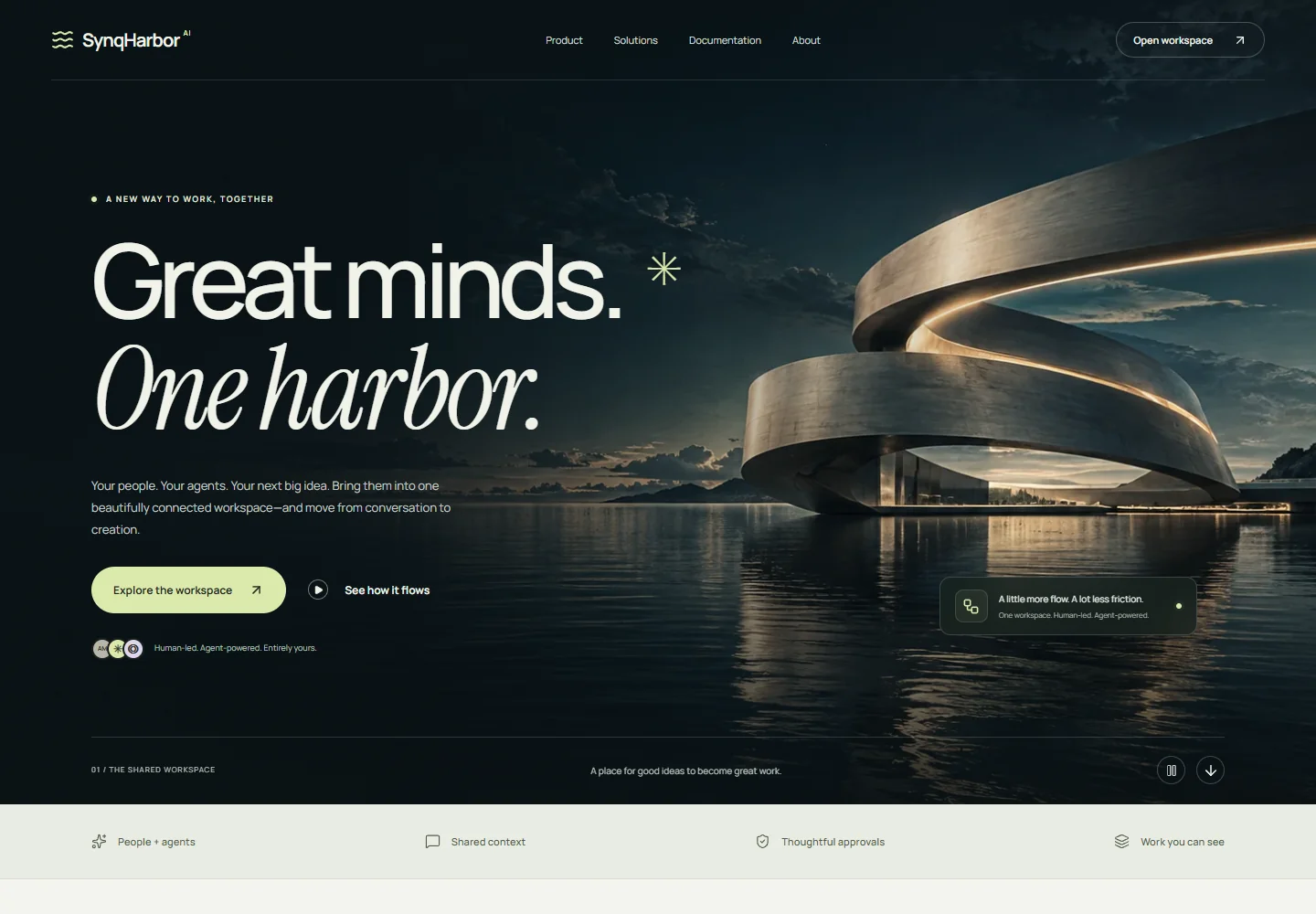
Deployed website and browser workspace · 21 tests, 100 route checks
Independent build
My collaboration product. The deployed release is a multipage website and browser-local workspace; authentication, persistence and agent execution remain planned.
THE ENGINEERING
An independent collaboration product with a deployed Next.js/React/TypeScript website, 25 public routes and nine workspace views. Browser-tab-local interactions cover task creation, search, status changes, conversations, version-aware client/developer approvals and report downloads. The October 16 release recorded 21 automated tests, 100 route/viewport checks, quality/security CI and 175 matching deployment hashes. Fonts and media are self-hosted, with reduced-motion support and portable static deployment. Workspace state resets on reload. Authentication, persistent collaboration, agent execution and external actions remain roadmap work. Availability and million-user capacity are future qualification targets, not achieved results.
BEFORE → AFTER
Real problems from this build, what I changed and the verified result.
- CASE 01Before
A revision can leave an older approval appearing valid.
AfterRecorded browser checks exercised revision and approval interactions; server-authoritative approval is future work.
How I fixed itMade the interface distinguish client content approval from developer release approval and clear stale authorization on revision.
- CASE 02Before
A visually polished static site can hide content before its animation engine runs.
AfterRecorded full-page inspection and reduced-motion checks passed after correction.
How I fixed itKept initial server-rendered content visible and made entrance motion optional.
- CASE 03Before
Matching deployed bytes does not prove the browser can run them under production security headers.
AfterThe recorded final release returned all 25 routes without JavaScript or CSP errors in the tested flows.
How I fixed itValidated UTF-8 script hashes and exercised the deployed browser flow after correcting an encoding mismatch.
Evidence reviewed: Source review October 16, 2026; recorded release evidence and open backend gates stated above