
Everyday Dental
Independent build of a dental practice website with an interactive patient journey, consent and access-denial states. No real patient records.
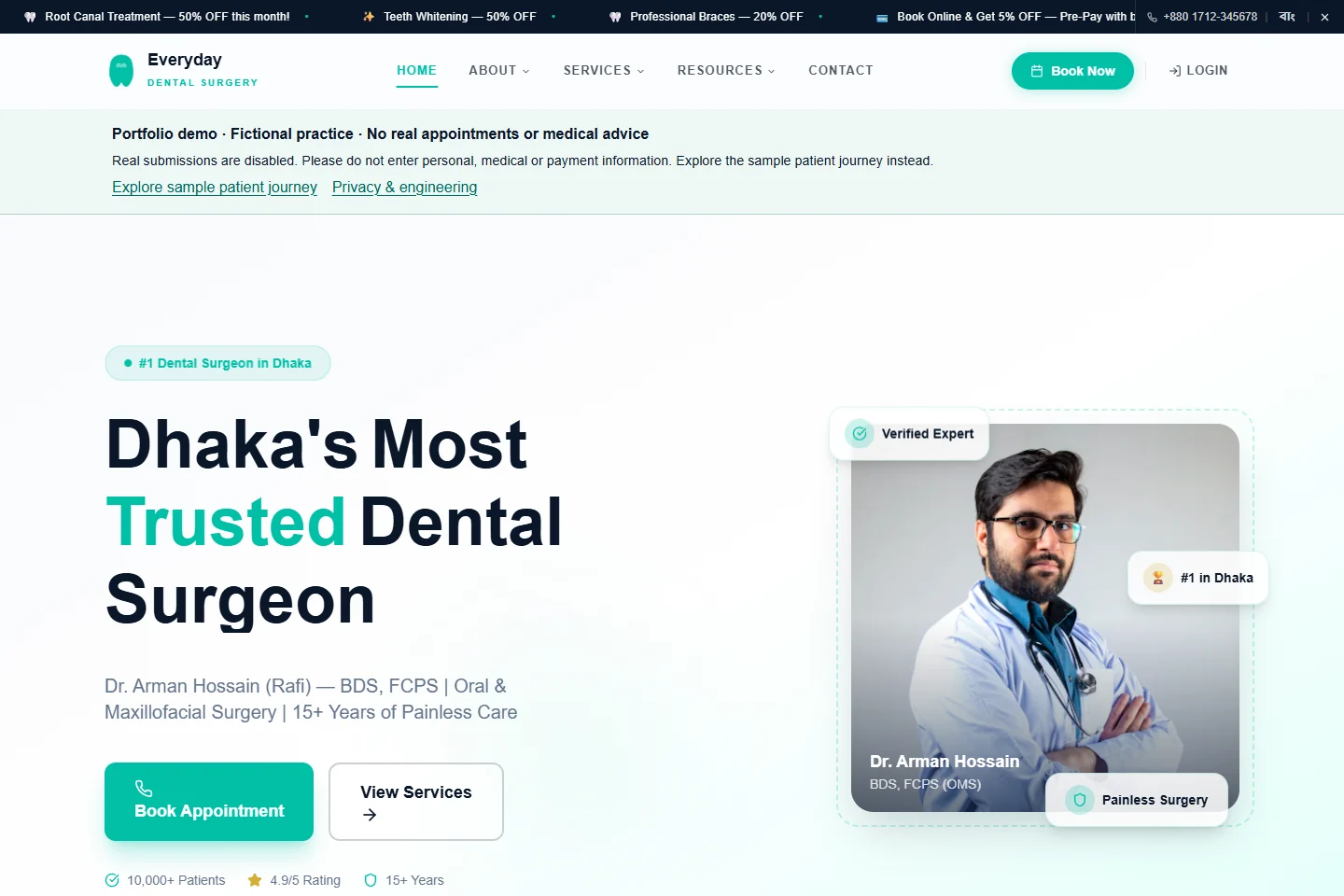
Independent build · source published on GitHub
Independent build
An independent build of a dental practice website, not a real practice. The patient journey stores no real patient records, payments or clinical data.
THE ENGINEERING
An independent build of a dental practice website, not a client project and not a real practice, with an interactive patient journey, consent examples, access-denial states and a FHIR-shaped export. State lives in browser memory and no real patient records are stored. Real intake, clinical authentication, payments, messaging and the historical clinical endpoints are disabled. It shows interface behavior and engineering boundaries; it is not an operating clinical portal. Source and documentation were published on GitHub with all 255 file hashes matching.
BEFORE → AFTER
Real problems from this build, what I changed and the verified result.
- CASE 01Before
The historical clinical version had real security gaps, including unauthenticated notification and breach handlers.
AfterThe public site runs only in a mode that accepts no real patient data.
How I fixed itDisabled all 11 historical Edge Function endpoints behind a deployed guard, with owner approval, and kept the defects documented rather than relabelled as repaired.
- CASE 02Before
Reviewers need to see privacy and consent behavior without handing over real health data.
After15 of 15 regression tests covering access decisions, consent, erasure and the runtime boundary.
How I fixed itBuilt a fixed patient journey with consent, access-denial, erasure and export flows in browser memory, with no real patient records.
- CASE 03Before
Applying historical migrations to an unknown live database could destroy existing records.
AfterThe corrected release passed all 138 file hashes.
How I fixed itPreserved every record: no migrations or database mutations were run, and upgrades require inventory, comparison and a tested rollback plan first.
Evidence reviewed: Portfolio release and GitHub publication, September 24, 2026